
Public-service healthcare
Healthdirect Contraception Option Finder
A Next.js decision-support experience built with accessibility at the center, helping people explore contraception options through a guided quiz and self-directed comparison path.
- Role
- Frontend developer on a healthcare decision-support product
- Key work
- Accessible quiz flows, reusable UI architecture, multilingual content, and privacy-conscious analytics.
- Stack
- Next.js, TypeScript, Accessibility, Storybook, next-intl
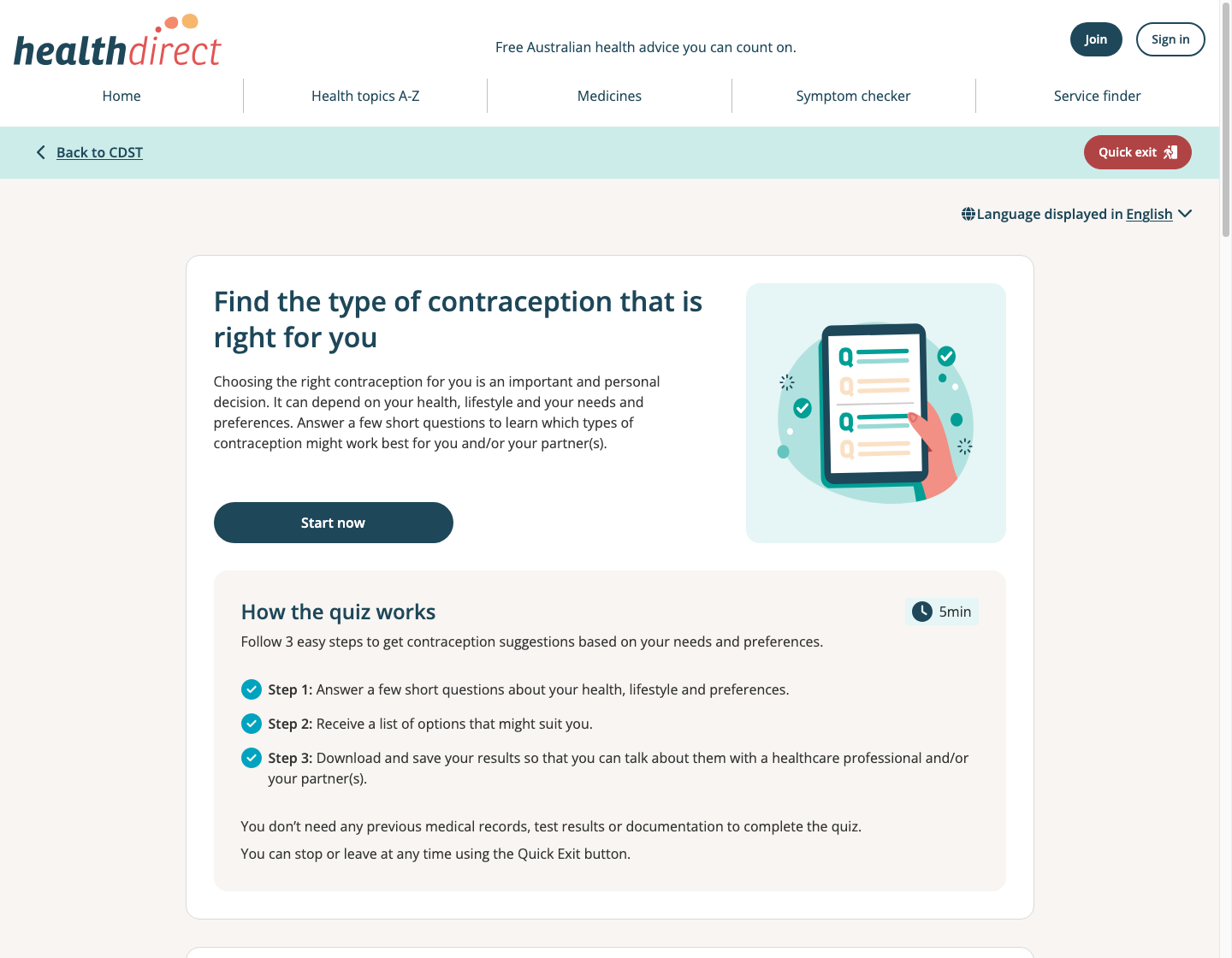
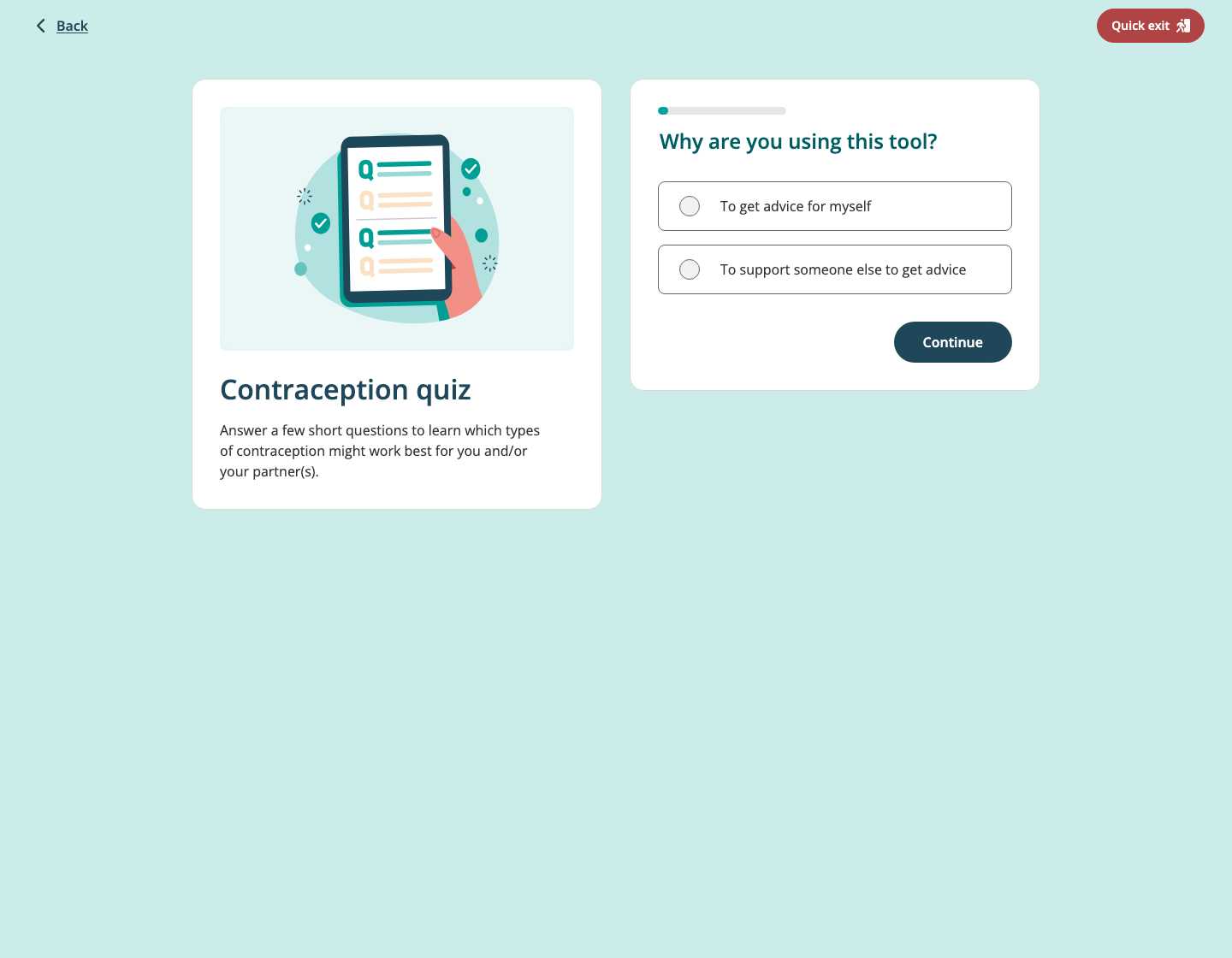
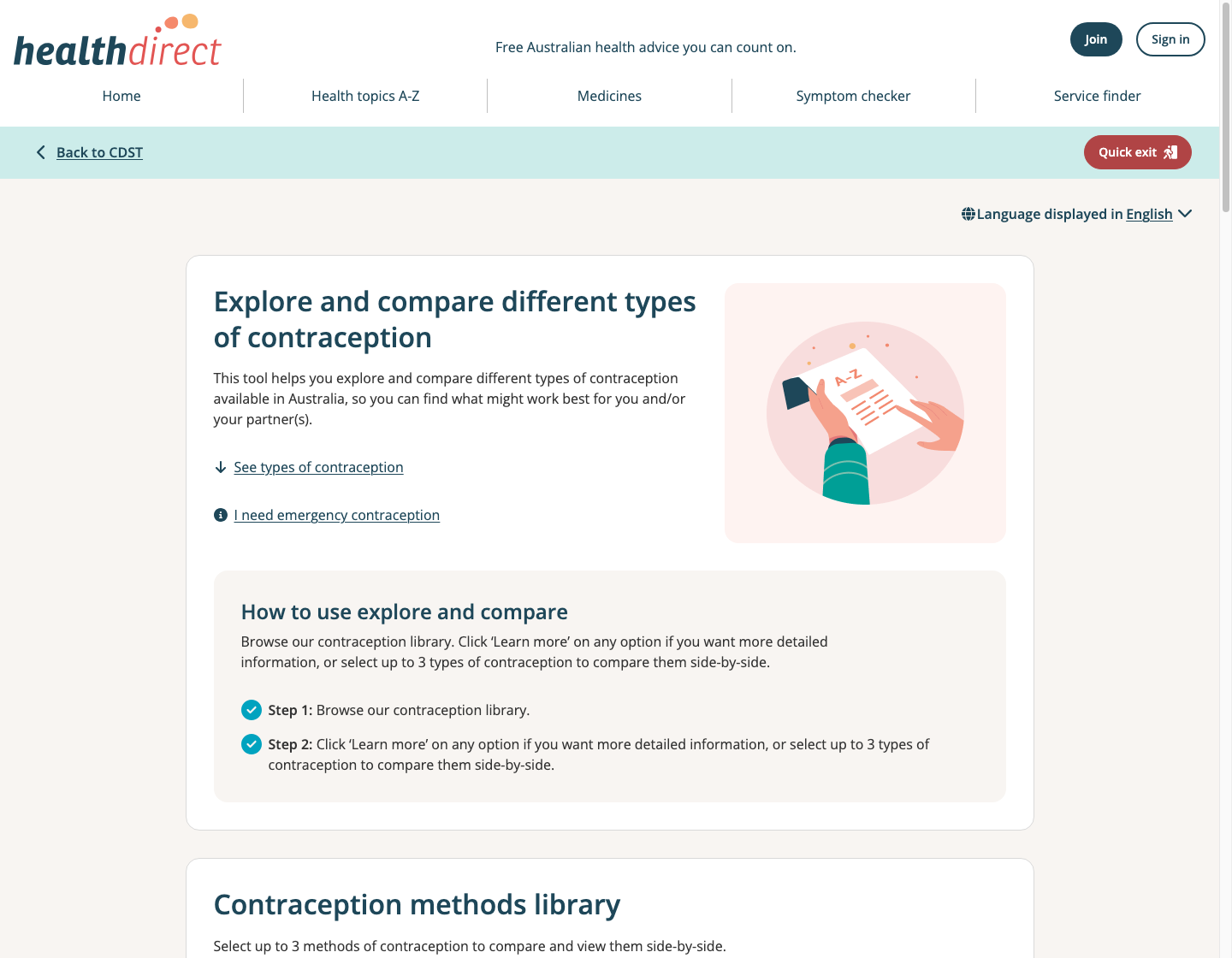
Screenshots
Key screens from the experience.
Focus
A high-trust healthcare product where frontend decisions need to preserve clinical meaning, privacy, accessibility, and content clarity.
Challenge
The product helps users understand contraception options without replacing individual medical advice. That meant the interface, content model, quiz flow, and analytics approach all needed to support informed choice while staying careful around clinical scope, sensitive information, translation, and accessibility.
Contribution
- Built responsive page, block, component, and quiz-flow interfaces in a Next.js and React application.
- Worked with a layered UI architecture where elements, components, blocks, and pages could be reviewed and reused without leaking implementation details into content.
- Supported multilingual content behavior, including stable locale-neutral IDs, English fallback handling, CJK content, and RTL layout validation.
- Implemented accessibility-sensitive interface details across keyboard behavior, semantic structure, target sizing, focus states, and screen-reader affordances.
- Contributed to privacy-conscious analytics and submission flows designed around anonymized quiz-result data rather than personal identifiers.
- Used Storybook to make components, blocks, pages, variants, and translated states easier for Healthdirect stakeholders to review.
Outcome
The work demonstrates frontend delivery in a high-stakes public health context, where accessibility, modern React architecture, content-driven UI, internationalisation, and privacy constraints all had to move together.